

When is a book grievable?
When publication day marks the end of something good

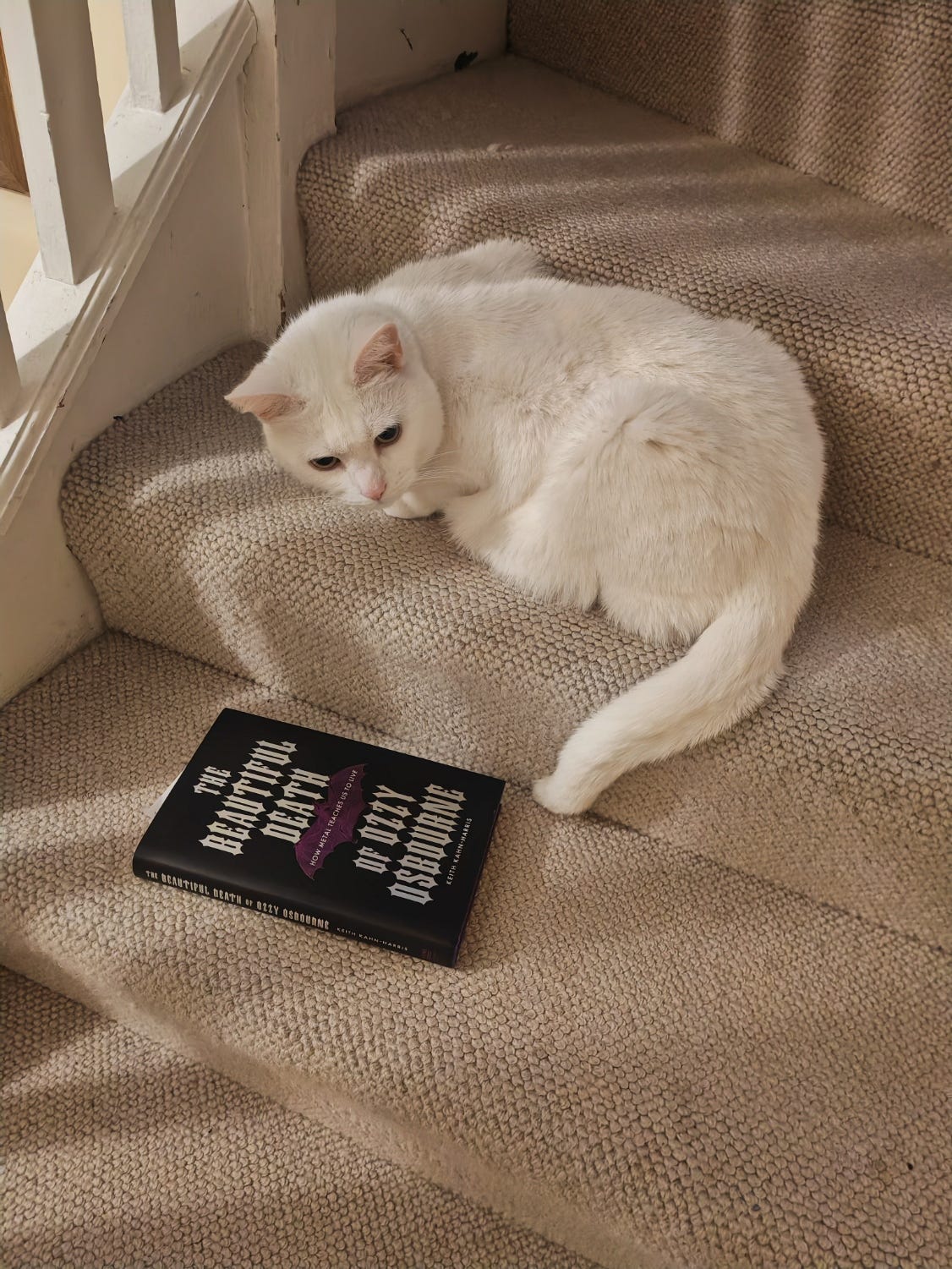
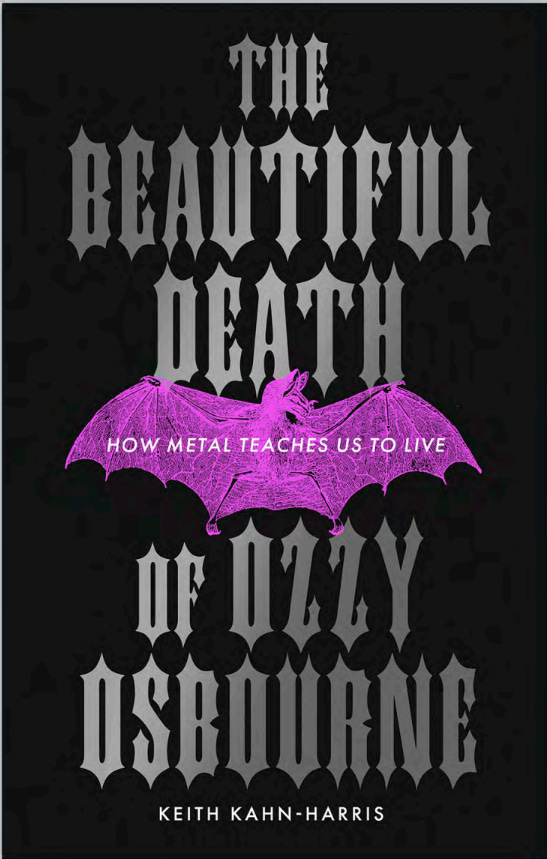
Well it’s out now; The Beautiful Death of Ozzy Osbourne is published today and must now take its chances in the sea of books.
I’ve been through this before, eight times (not counting edited books). But there’s something different this time; something wholly unexpected.
I am grieving my book.
More than anything I’ve written before, this publication has defined a period of my life; a time so extraordinary that I barely know how to describe it. I’ll try to keep it short but it’s not going to be easy...
My editor, Andrew Furlow, reached out to me to suggest I write a book on Ozzy at the end of July 2026. That summer was already proving to be unusual. I’d broken my ankle at the start of the month - a new experience for me - and on the day it was diagnosed my son rang to tell me he had got a first in his undergraduate degree. I experienced his graduation day in a mixture of pain and elation that I won’t ever forget. After years of turbulence in which my kids faced extraordinary challenges, the pain somehow added spice to the sense of pride and relief that I felt.
A month later, my ankle slowly healing, the elation at my son’s success undimmed, I was thrilled that a book might be in the offing. I feel moody and lack self-esteem when I don’t have a book in preparation; it’s a kind of addiction. My previous book, Everyday Jews only came out a few months before, but already I was starting to jones for the next hit of publishing dopamine. Yet the process of working up ideas and pitching them is always daunting to contemplate and it was a great relief when Andrew reached out to me as I could circumvent much of that angst. While I still had to write a proposal, it ended up being a fairly easy task, given that Andrew had already given me a steer as to what the publisher was looking for.
Something else also happened at the start of August that would have far-reaching consequences: I began to take Mounjaro, the weight loss drug. It was time; I was seriously overweight. 10 months on and I am still taking it. I’ve lost over 23 kg so far, but ironically that isn’t the most dramatic effect the drug has had on me. While some of the side effects have been unpleasant, they are more than outweighed by a completely unexpected one: After 33 years of moderate but persistent ME/Chronic Fatigue Syndrome, Mounjaro has dramatically improved my energy levels.
I’m not ‘better’. I still have flare-ups, but they are less severe than before and less regular. What Mounjaro has done for me is to improve the quality of my sleep to the point where I don’t need to be in bed for as long as I used to. I actually wake up feeling refreshed and ready to greet the day. Indeed, the most mind-boggling development in my life has been that I am often at my desk at 7am, and my improved concentration means I am far more productive than I used to be.
Another welcome surprise ended up freeing even more of my time: My daughter, after several years of health challenges, managed to not just start university and live away from home, she has actually thrived. With my son staying on at university to do a Masters degree, my wife and I became empty nesters. While we miss the kids, the house has been wonderfully quiet, we spend more time together than we used to even as there is also more time to ourselves as well.
These were all pretty ideal conditions under which to write a book, particularly a book with a very tight deadline (the first draft was due just before Christmas). The text just seemed to flow naturally, as if it were already written. But that wasn’t the end of my writing adventures: At the start of this year, I began to write a journal and I have yet to miss a day. I wake up early and the first thing I do is tap out several hundred words on everything and nothing. I rarely re-read what I write; the process is enough to clear my head for the day ahead.
Although I do still write notes and occasional longer reflections on paper (I am a massive stationary geek and the hand-made notebook I bought in Venice last summer is so gorgeous I just had to fill it), most of the time I write on my computer. That brings me to the other dramatic change in my life: Last summer I discovered the mechanical keyboard hobby and its subculture. There’s a lot I could say about this - and in due course I hope to publish something on this discovery - but the most important thing is that, until I actually bought my first decent keyboard, I never knew how exquisite an experience typing could be. I now have eight beautiful keyboards, all of which I have modded in some way. Like other hobbyists, I am addicted to the sound and feel of a nice keyboard. And how happy I was that I had a book to write to revel in this sensorium!
Enjoy the sounds of my first proper keyboard, the Nuphy Air60 V2 (I bought it with the red switches):
This is not the end of it. Other changes in my life since the summer of 2026 include:
Finally, after years of prevarication, starting to declutter the chaos of my study.
Finally, after years of prevarication, starting to organise my online archive.
Making serious progress in reducing my dependence on Google and apps that don’t love me back such as Evernote.
Experimenting with Linux (I’ve become an enthusiastic distro-hopper) and challenging myself to learn new tech skills (I now have a raspberry pi).
Finally, after years of frustration, joining a new synagogue and discovering, to my astonishment, that I actively wanted to attend regularly.
Does all this sound like I am on a bit of a high? Rest assured, this isn’t a manic episode. I am doing more than just start new projects; I’ve been sticking with them. In any case, my life is still often arduous and challenging. The political context is dire and I fear for the future. As I said earlier, I still have bad days in my physical health and I am occasionally overwhelmed by anxiety and stress. I still need to support loved ones going through hard times.
Despite all that, for the first time in years I have found something akin to hope. I’ve learned that there are possibilities in the present for living a good life that I never knew existed. I’ve learned that life can change unexpectedly in positive ways as well as negative. I’ve learned that the world is not fixed on its axis.
While The Beautiful Death of Ozzy Osbourne isn’t a memoir, there is a synergy between the discovery of hope in my personal life and the argument I make in the book: Both Ozzy, and metal more generally, ended up in a place that was unimaginable when they were starting out. That the singer could be publicly mourned on the streets of Birmingham is as surprising as metal becoming an inclusive diverse culture. The capacity for surprise is necessary to build the capacity for hope.
And now it’s over. Which is a crazy thing to say really. There’s no reason why I can’t enjoy health, keyboards and fatherly pride going forward. I will, of course. But the book functioned as the kind of guarantor for everything else. I let my mania for pitching subside. I stopped hustling. I knew a book was coming - for a big publisher! - and I could concentrate on my day jobs, hobbies, health and family.
And now it’s over. I will do all I can to help publicise it and have a few fun speaking events to look forward over the next few months. Hopefully it will sell something, but I am always aware of how many other books are out there. I can’t take for granted that this book will lead to editors beating down my door. I want another book and I have ideas. The hard graft of making the next book happen begins now.
As long as I live, I will remember The Beautiiful Death of Ozzy Osbourne as the product of a time of change and unexpected improvement in my life; a time of surprise, a time of hope. But right now I am grieving. Only time will tell whether the changes this book has wrought will be permanent, or whether the book is a monument to a beautiful passing phase in my life.
You’re welcome to buy a copy...
Great post Keith, well done on the book and all the other good stuff. And cheer up - I have just bought a copy! All the best, your erstwhile and grateful masters dissertation student, Terry